95V3-1.jpg)


Making the Right Choice for Your Project
When you're building a deck, fence, or even framing a wall, one of the most common questions we get at Youngblood Builders Supply is:
“Do I need pressure treated lumber, or can I use regular lumber?”
The answer depends on where and how the wood will be used. Choosing the wrong type can lead to rot, warping, or structural issues down the road—so let’s break it down in a simple, practical way.
What Is Pressure Treated Lumber?


Pressure treated lumber is wood that has been infused with chemicals under pressure to protect it from:
- Rot
- Moisture damage
- Termites and insects
- Fungal decay
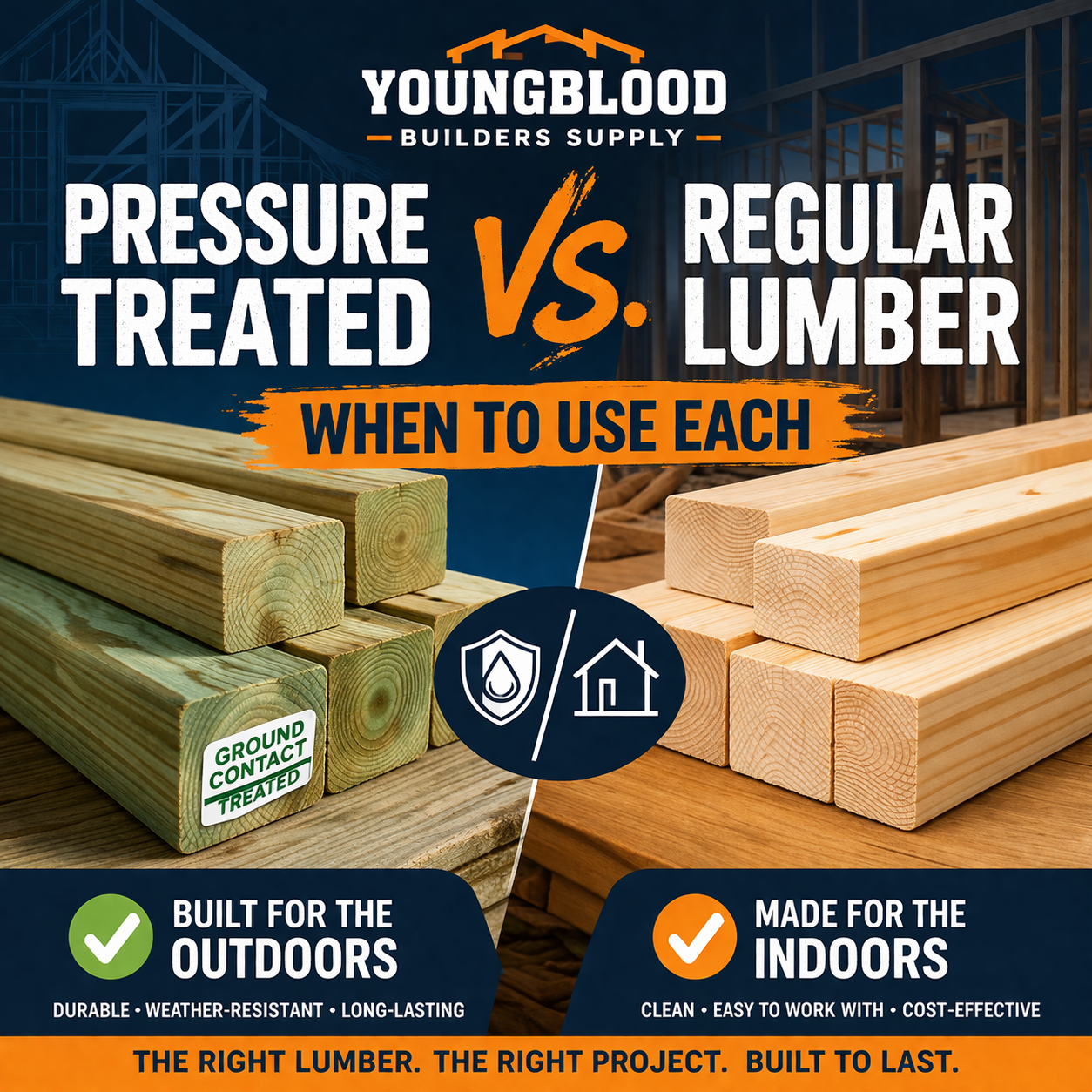
You’ll usually recognize it by its slight green tint and heavier weight.
✅ Best Uses for Pressure Treated Lumber:
- Deck framing and posts
- Fence posts and rails
- Anything touching the ground
- Outdoor structures exposed to weather
- Sill plates (wood touching concrete)
Rule of thumb: If it’s outside or touching concrete/ground — go treated.
What Is Regular (Untreated) Lumber?


Regular lumber (often kiln-dried) is not chemically treated and is intended for dry, indoor use.
It’s:
- Lighter
- Easier to cut and handle
- Typically less expensive
✅ Best Uses for Regular Lumber:
- Interior wall framing
- Furniture and cabinetry
- Trim work
- Shelving
- Any dry, protected environment
Rule of thumb: If it stays dry and indoors — regular lumber works great.
⚖️ Side-by-Side Comparison
| Feature | Pressure Treated | Regular Lumber |
|---|---|---|
| Moisture Resistance | Excellent | Poor |
| Insect Resistance | High | Low |
| Best Location | Outdoors | Indoors |
| Cost | Higher | Lower |
| Weight | Heavier | Lighter |
| Lifespan (Outdoor Use) | Long-lasting | Short |
When NOT to Use Pressure Treated Lumber
Even though treated lumber is durable, it’s not always the right choice.
Avoid using it for:
- Indoor furniture
- Kitchen projects
- Anywhere frequent human contact is expected
Why? Because treated wood contains chemicals and can also:
- Warp as it dries
- Be harder to paint or stain initially
⚠️ When You MUST Use Pressure Treated
Certain situations require treated lumber by code or best practice:
- Wood in contact with concrete
- Ground-contact posts
- Exterior framing exposed to weather
- Crawl space applications
Skipping treated lumber in these areas can lead to premature failure and costly repairs.
Pro Tips from Youngblood Builders Supply
- ✔ Let treated lumber dry before staining or sealing
- ✔ Use galvanized or coated fasteners (prevents corrosion)
- ✔ Wear gloves when handling treated wood
- ✔ Always check the treatment rating (ground-contact vs above-ground)
Shop Smart for Your Next Project
At Youngblood Builders Supply, we carry a full selection of:
- Pressure treated posts, boards, and framing lumber
- Standard kiln-dried lumber
- Fasteners and hardware designed for treated wood
Need help choosing? Our team will point you to exactly what you need—no guesswork.
Final Takeaway
- Outdoor or moisture exposure? → Pressure Treated
- Indoor and dry? → Regular Lumber
Choosing correctly upfront saves time, money, and headaches later.
Making the Right Choice for Your Project
When you're building a deck, fence, or even framing a wall, one of the most common questions we get at Youngblood Builders Supply is:
“Do I need pressure treated lumber, or can I use regular lumber?”
The answer depends on where and how the wood will be used. Choosing the wrong type can lead to rot, warping, or structural issues down the road—so let’s break it down in a simple, practical way.
What Is Pressure Treated Lumber?
Pressure treated lumber is wood that has been infused with chemicals under pressure to protect it from:
- Rot
- Moisture damage
- Termites and insects
- Fungal decay
You’ll usually recognize it by its slight green tint and heavier weight.
✅ Best Uses for Pressure Treated Lumber:
- Deck framing and posts
- Fence posts and rails
- Anything touching the ground
- Outdoor structures exposed to weather
- Sill plates (wood touching concrete)
Rule of thumb: If it’s outside or touching concrete/ground — go treated.
What Is Regular (Untreated) Lumber?
Regular lumber (often kiln-dried) is not chemically treated and is intended for dry, indoor use.
It’s:
- Lighter
- Easier to cut and handle
- Typically less expensive
✅ Best Uses for Regular Lumber:
- Interior wall framing
- Furniture and cabinetry
- Trim work
- Shelving
- Any dry, protected environment
Rule of thumb: If it stays dry and indoors — regular lumber works great.
⚖️ Side-by-Side Comparison
| Feature | Pressure Treated | Regular Lumber |
|---|---|---|
| Moisture Resistance | Excellent | Poor |
| Insect Resistance | High | Low |
| Best Location | Outdoors | Indoors |
| Cost | Higher | Lower |
| Weight | Heavier | Lighter |
| Lifespan (Outdoor Use) | Long-lasting | Short |
When NOT to Use Pressure Treated Lumber
Even though treated lumber is durable, it’s not always the right choice.
Avoid using it for:
- Indoor furniture
- Kitchen projects
- Anywhere frequent human contact is expected
Why? Because treated wood contains chemicals and can also:
- Warp as it dries
- Be harder to paint or stain initially
⚠️ When You MUST Use Pressure Treated
Certain situations require treated lumber by code or best practice:
- Wood in contact with concrete
- Ground-contact posts
- Exterior framing exposed to weather
- Crawl space applications
Skipping treated lumber in these areas can lead to premature failure and costly repairs.
Pro Tips from Youngblood Builders Supply
- ✔ Let treated lumber dry before staining or sealing
- ✔ Use galvanized or coated fasteners (prevents corrosion)
- ✔ Wear gloves when handling treated wood
- ✔ Always check the treatment rating (ground-contact vs above-ground)
Shop Smart for Your Next Project
At Youngblood Builders Supply, we carry a full selection of:
- Pressure treated posts, boards, and framing lumber
- Standard kiln-dried lumber
- Fasteners and hardware designed for treated wood
Need help choosing? Our team will point you to exactly what you need—no guesswork.
Final Takeaway
- Outdoor or moisture exposure? → Pressure Treated
- Indoor and dry? → Regular Lumber
Choosing correctly upfront saves time, money, and headaches later.